
SPCC plans for facilities that store oil, done right the first time
If your facility stores more than 1,320 gallons of oil in aboveground containers, federal rules require a Spill Prevention, Control and Countermeasure (SPCC) plan. We prepare new plans, 5-year reviews and amendments, from self-certified Tier I plans to PE-certified plans for larger facilities.
- Nationwide service with local field professionals
- New SPCC plans, 5-year reviews and amendments
- Tier I, Tier II and PE-certified plans
- Site visit, tank inventory and facility diagram
- Inspection checklists and training records
Prefer to talk to someone? (877) 774-2731
What is an SPCC plan?
A Spill Prevention, Control and Countermeasure (SPCC) plan is the oil spill prevention plan EPA requires under 40 CFR Part 112 for facilities that store oil above certain thresholds and could reasonably be expected to discharge oil to navigable waters or adjoining shorelines. It covers every type of oil, including diesel, gasoline, hydraulic and lubricating oils, transformer oil, used oil, and vegetable oils and animal fats.
The plan documents your oil storage, secondary containment, inspection and integrity-testing program, spill response procedures, security, and personnel training. It has to be reviewed at least every five years and amended whenever a change at the facility affects its potential to discharge oil.
Does your facility need an SPCC plan?
- You have more than 1,320 gallons of total aboveground oil storage capacity in containers of 55 gallons or larger
- You have emergency generators, fuel tanks, oil-filled transformers or hydraulic equipment
- You store motor oil, used oil, lubricants or cooking oil in drums or totes
- Your current plan is more than five years old or your tanks have changed
- A regulator, insurer, lender or customer has asked for your SPCC plan
Not sure? Send us a few details and we'll tell you whether the rule applies before you spend anything.
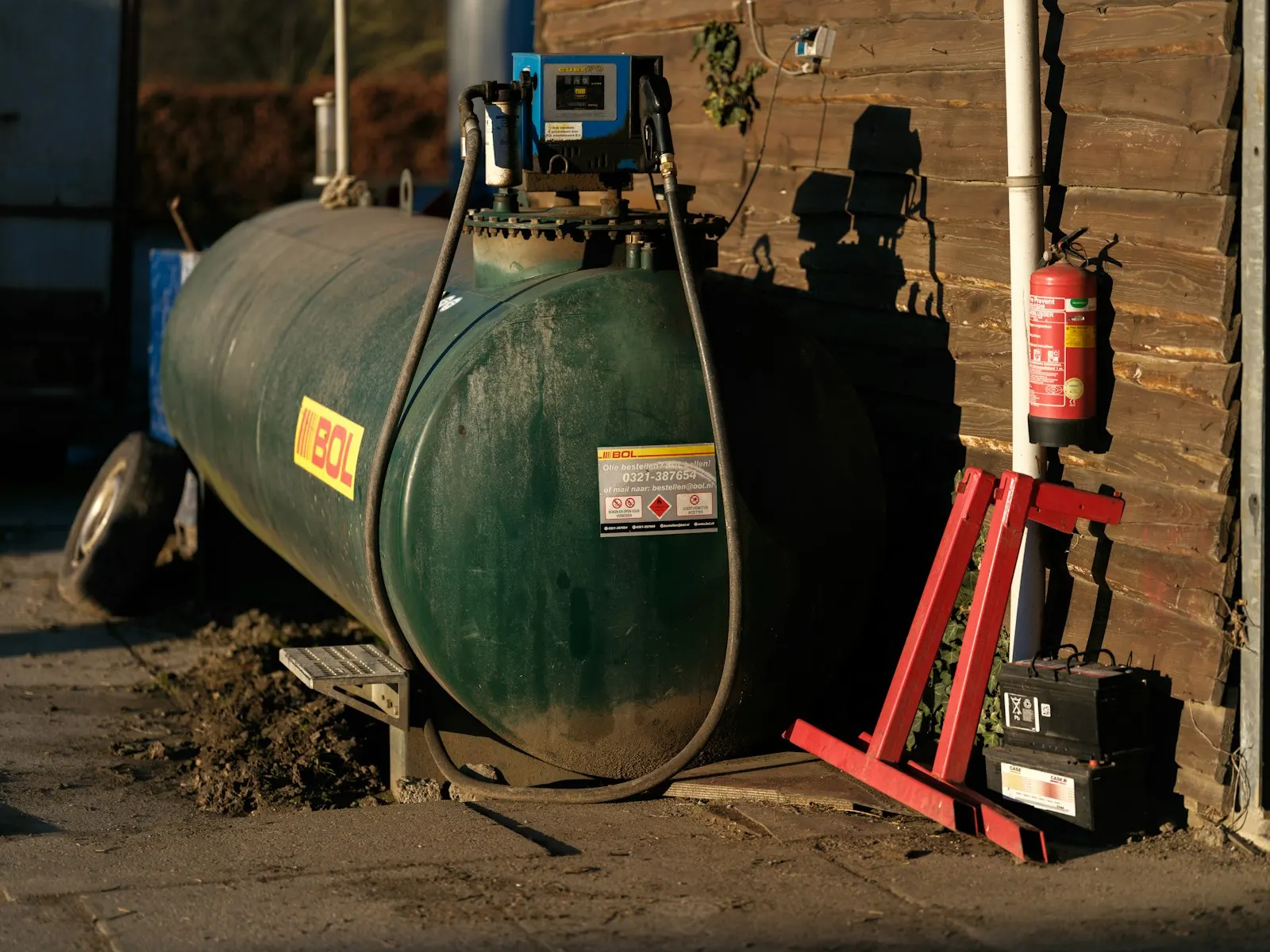
Our SPCC Plan service covers
Every container of 55 gallons or more, capacity, contents and location.
Whether you are Tier I, Tier II or need a PE-certified plan.
Containers, transfer areas, drainage, containment and discharge pathways.
Capacity calculations and recommendations for berms, dikes, double-walled tanks and spill kits.
Monthly and annual checklists, plus testing schedules referencing industry standards such as STI SP001 and API 653.
Notification contacts, countermeasures and cleanup steps for your facility.
Annual discharge prevention briefing materials and recordkeeping forms.
5-year reviews, technical amendments and Professional Engineer certification where required.
EPA inspects SPCC facilities and the Clean Water Act sets civil penalties per day, per violation. A missing plan, an outdated plan, or no secondary containment are among the most common findings, and an oil discharge without a plan in place makes every consequence worse.
From request to compliance in four steps
- 1
Send the basics
Facility location, type and approximate oil storage. Upload a tank list if you have one.
- 2
Quote and scope
We confirm the tier and plan type and send a fixed quote, usually the same business day.
- 3
Site visit
A field professional inventories containers, containment and drainage.
- 4
Plan delivered
Your SPCC plan, diagram, checklists and training materials, certified as required.
Who we help
- Data centers, hospitals and offices with emergency generator fuel
- Manufacturers and warehouses with oil drums, totes and hydraulic systems
- Fleet yards, contractors and dealerships with fuel and used-oil tanks
- Utilities, farms and fuel distributors with bulk storage
Why Breeze
- One project manager from quote to final deliverable
- Nationwide coverage with local field professionals
- Fixed quotes before any work starts
- Average response time 1 hour during business hours
Request your SPCC Plan quote
Send the details below and a project manager will reply with scope, price and timing. Average response time 1 hour during business hours.
- No obligation and no payment details
- Fixed quote before any work starts
- Upload plans or lists if you have them
Prefer to talk to someone? (877) 774-2731
SPCC Plan questions
What is an SPCC plan?
A Spill Prevention, Control and Countermeasure (SPCC) plan is a written oil spill prevention plan required by EPA under 40 CFR Part 112. It describes a facility's oil storage, secondary containment, inspections and integrity testing, spill response procedures, security and training, and is designed to prevent oil discharges to navigable waters and adjoining shorelines.
Who needs an SPCC plan?
Non-transportation-related facilities that have more than 1,320 U.S. gallons of aggregate aboveground oil storage capacity, or more than 42,000 gallons of completely buried storage capacity, and that could reasonably be expected to discharge oil to navigable waters or adjoining shorelines. Only containers of 55 gallons or more are counted.
Does an SPCC plan need a Professional Engineer?
Not always. Qualified facilities with 10,000 gallons or less of aboveground oil storage and a clean spill history can self-certify. Tier I facilities (no container over 5,000 gallons) can use EPA's template; Tier II facilities can self-certify a full plan. All other facilities need a plan reviewed and certified by a licensed Professional Engineer.
How often does an SPCC plan need to be updated?
The owner or operator must review the plan at least once every five years and amend it within six months of any change in facility design, construction, operation or maintenance that materially affects the potential for an oil discharge. Technical amendments to a PE-certified plan must be certified by a PE.
What counts as oil under the SPCC rule?
Oil of any kind, including petroleum products such as diesel, gasoline, fuel oil, hydraulic oil, lubricating oil, transformer oil and used oil, as well as non-petroleum oils such as vegetable oils and animal fats.
How much does an SPCC plan cost?
It depends on the number of containers, the plan tier and whether PE certification is required. Send us your facility type and approximate storage and we'll send a fixed quote, typically the same business day.
Do emergency generators count?
Yes. Fuel tanks for emergency generators, including belly tanks, count toward the 1,320-gallon threshold. Many offices, data centers and hospitals need SPCC plans because of generator fuel alone.
Do you work nationwide?
Yes. We prepare SPCC plans for facilities in all 50 states, with site visits by our local field network.
Nationwide service, with local professionals on the ground
We work in all 50 states and Washington, D.C., and every site visit is done by a field professional based near your property: someone who knows the local terrain, building stock, regulators and access. Your project manager coordinates the field work, so you get one point of contact and the same scope and report quality wherever your property is.
- Local field professionals in all 50 states and Washington, D.C.
- One project manager and one consistent report format for every site
- Single sites or multi-site portfolios across many states
- Average response time 1 hour during business hours
Trusted by top banks, brands and development companies




















Get your SPCC Plan quote today.
Fixed pricing, nationwide coverage. Average response time 1 hour during business hours.